
Using the Environment as Part of Your Program
Are you documenting your environment as part of your program? Learn how to show intentional teaching through setup, materials, and space using the Butler Method.

In high-quality Early Childhood Education and Care practice, the environment is not just a backdrop.
It is an active part of learning.
Often referred to as the “third teacher”, the environment:
- invites exploration
- supports independence
- encourages collaboration
- shapes how children engage and learn
Yet in many programs, the environment is not clearly documented — or is treated as separate from planning.
The Butler Method supports educators to recognise the environment as a key part of the program and to document it with the same level of intention as any experience.
The Environment Is Not Separate From the Program
A common misconception is that programming only refers to:
- planned activities
- educator-led experiences
In reality, the environment:
- influences behaviour
- guides engagement
- creates opportunities for learning
For example:
- open-ended materials invite creativity
- accessible resources support independence
- thoughtfully arranged spaces encourage collaboration
This means the environment is not additional — it is central.
What the ‘Third Teacher’ Looks Like in Practice
When used intentionally, the environment may include:
- carefully selected materials
- open-ended resources
- defined and flexible learning spaces
- invitations or provocations
- changes made in response to children’s interests
These decisions are:
- purposeful
- responsive
- linked to learning

What This Looks Like in Practice
The environment often drives learning without needing structured activities.
For example:
- Program: creating a loose parts area with natural materials (sticks, stones, leaves, fabric) to support open-ended construction and imaginative play
- Intentional Teaching: arranged materials to encourage sorting and combining, introduced baskets for organisation, then observed engagement
- Reflection: children began creating more complex structures, grouping materials intentionally, and sustaining play for longer periods
This example shows:
- environment-led learning
- creativity and problem-solving
- increasing complexity over time
Not a planned “activity”.
Documenting the Environment Within Your Program
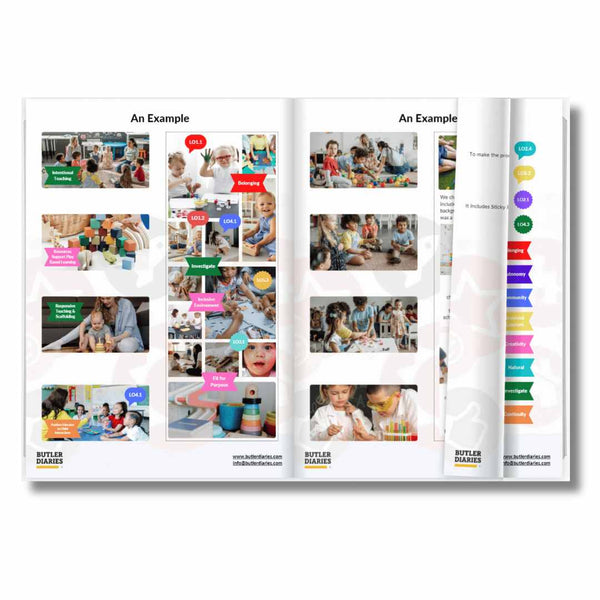
Within the Weekly Programming and Reflection Diary, the environment can be documented as part of programming.
This might include:
Environment Setup
- what is available to children
- how spaces are arranged
Provocations
- materials introduced to spark thinking
- invitations to explore
Changes to the Environment
- adjustments based on children’s engagement
- additions or removal of resources
This ensures the program reflects:
- how learning is supported
- not just what children do
The Environment as Intentional Teaching
Many environmental decisions are forms of intentional teaching.
For example:
- adding materials to extend exploration
- simplifying a space to support focus
- rearranging areas to encourage collaboration
These decisions:
- guide engagement
- influence learning
- support development
Documenting them helps make educator thinking visible.

Responding to Children Through the Environment
A strong program shows how educators respond to children through environmental changes.
Educators might:
- extend a popular area
- add complexity to an experience
- introduce new materials to deepen investigation
For example:
- interest in building → add connectors and varied materials
- interest in nature → introduce natural loose parts
This shows:
- responsiveness
- the cycle of planning in action
Using Reflection to Evaluate the Environment
Reflection helps educators understand how effective the environment is.
They might consider:
- Are children engaging deeply?
- Are materials being used meaningfully?
- Does the environment support independence?
- What could be adjusted?
This supports:
- continuous improvement
- stronger intentional teaching
Your reflection spread includes a weekly environment reflection box to support this intentional planning.
Showing the Environment Over Time
The environment is not static.
It evolves as:
- children’s interests change
- learning deepens
- investigations develop
Using the Butler Method, educators can:
- document changes across weeks
- track how engagement shifts
- show progression
Aligning with EYLF v2.0 and the National Quality Standard
The environment is central to:
- Outcome 2: Connection to the world
- Outcome 4: Learning
It also supports:
- QA1: Educational program and practice
- QA3: Physical environment
Documenting the environment helps demonstrate:
- intentional design
- responsive practice
- alignment with frameworks

You Don’t Need More — You Need to Show What’s Already There
Many educators are already making thoughtful decisions about their environment.
The shift is not about doing more.
It is about:
- recognising these decisions
- documenting them clearly
- linking them to learning
Final Thought
The environment is always teaching.
The question is whether it is being used intentionally — and whether that intention is visible.
The Butler Method supports educators to document:
- how the environment is designed
- how it responds to children
- how it supports learning over time
So your program reflects not just what is planned, but the conditions that make learning possible.
Related Articles