
Butler Buzz
Resources, how-tos, and sector insights to help you document better, reflect deeper, and thrive in your practice. Our go-to resource for programming support, compliance guidance, and inspiration.

Using the Programming and Reflection Educator Diary Within Slow Pedagogy
Struggling to document slow pedagogy in a weekly program? Learn how to use the Weekly Programming and Reflection Diary to show depth, continuity, and children’s thinking over time.

The Butler Method Is Not a Pedagogy - Here's What It Actually Does
The Butler Method isn’t a pedagogy — it’s a way to make your practice visible. Learn how to move beyond activities and document children’s learning, thinking, and progression in a way that aligns with EYLF v2.0 and the National Quality Standard.

2027 Diaries Collection Update: Making Every Page Easier to Access
Your first sneak peek into the 2027 Diaries is here! And it's a guaranteed practical update you'll love!

What counts as evidence of learning
Following recent sector discussions around child safety, privacy, and intentional documentation, many educators are asking: “If we’re taking fewer photos… what actually counts as evidence of learning?” The answer is reassuring: Evidence of learning has never been limited to photographs.

10 Ways to Be Safer with Photographs in Early Childhood Education and Care
Recent updates across the sector — including strengthened Child Safe Standards and growing guidance around privacy — are prompting many services to reflect on how photographs of children are used in documentation. For years, photos have been a dominant form of “evidence”. But the conversation is shifting.

Stop Trying to Fill the Boxes: A Better Way to Think About Programming
You are not planning for the boxes. You are planning for children, learning, and intentional teaching. The boxes come after. Move beyond a box-filling exercise and into intentional documentation.

Guide to Butler Diary Sizing
Butler Diaries products are intentionally designed to best support you in your role and within your practices. This does not just include the content, but the physical design of the Diary itself. This guide outlines the sizes and inclusions of Butler Diaries, so there are no surprises when your Diary arrives!

Learning Environments and Experiences: Are you Being Intentional?
A growing concern across the sector is when an experience or environment is described as “EYLF-aligned” simply because it looks appealing, without any clear learning intention behind it. An experience can be engaging and aesthetically pleasing and still lack intentional teaching. The EYLF is clear about intention in learning environments and experiences...

7 Printable EYLF Learning Outcome Templates
Printable EYLF learning outcomes resources can be powerful. When tools are designed to be printed and used in real programming — not just read — they help educators move from overthinking to confident action.

Understanding the New Weekly Programming Reflection Diary Layout
Learn what’s changed in the Weekly Programming and Reflection Diary layout, why the update was made, and how it better aligns with the EYLF. Clear guidance on where to record experiences and how to plan holistically.

Child Development Age Calculator
A tool like the Child Development Age Calculator can offer support by providing a quick way to check typical achievements in areas like physical skills, thinking abilities, and emotional growth. These may be helpful when developing goals for the child.

How to Enhance Documentation With Codes
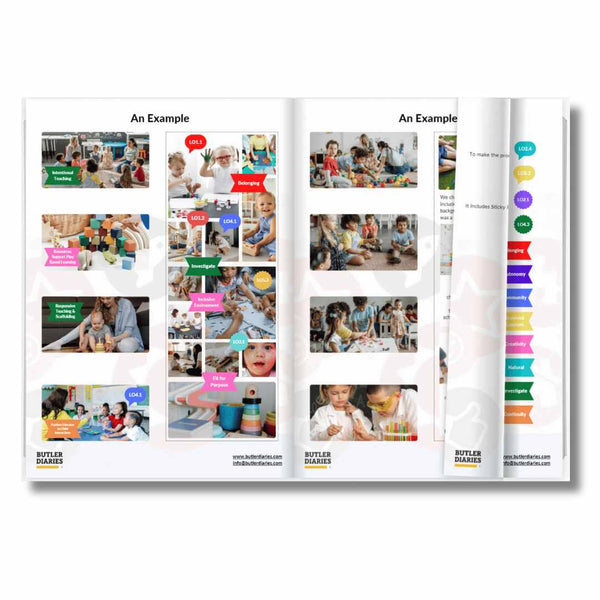
Documentation doesn’t need to be longer to be stronger — it needs to be easier to follow. This practical guide explains how educators can use coding systems (like initials, dates, stickers, colour coding, EYLF learning outcomes and NQS tags) to make the cycle of planning clear, consistent, and easy to evidence. With simple examples for both programming and leadership diaries, you’ll learn how to strengthen compliance and show intentional teaching without increasing workload.

How to Build a Culture of Critical Reflection
Critical reflection isn’t built on motivation — it’s built on structure. In Early Childhood Education and Care, a culture of critical reflection helps educators improve practice, strengthen programming decisions, and create stronger evidence for the NQS. This blog breaks down practical ways to embed reflection into daily routines without adding more workload.

How to Do Weekly Programming and Reflection Using the Cycle of Planning
This post breaks down a simple weekly routine based on the Cycle of Planning, and shows how to document it in a way that’s realistic, consistent, and evidence-friendly. It is a practical step-by-step guide for overwhelmed educators who want clarity, consistency, and evidence without over-documenting.

What to Include in Each Programming Box
“What actually goes in each programming box?” This post breaks down ideas for what to include in each programming box, links them clearly to the EYLF, and — most importantly — explains why the same experience can legitimately sit in different boxes, depending on your purpose.

Support Directories: Finding the Support You Need on Our Website
Finding support shouldn’t be a challenge. Our website brings everything you need into one place—from help using your diary, to professional development, to live assistance when you need a real person. Here’s a simple guide to where you can find support and what’s available to help you stay organised, confident, and connected in your ECEC practice.

Educator Reflection Prompt Finder
Finding time to pause and think about your practice can be tough. Yet, reflection is where real growth happens. Tools like the Educator Reflection Prompt Finder are here to make that process easier, guiding you with targeted questions to unpack your experiences and plan for better outcomes.

EYLF Outcome Calculator
Type in a brief description of an activity or observation, like 'children building with blocks.' The tool uses a predefined mapping to connect your input to the five EYLF outcomes. You’ll get a breakdown of the most relevant outcomes and a quick note on how the activity supports each one.