
QLD Child Safe Standards in Early Childhood Education and Care
From 1 January 2026, the Queensland Child Safe Standards apply to organisations working with children, including Early Childhood Education and Care services. This guide breaks down what that means for your practice and documentation.

A practical guide to what’s changing — and how to show evidence in your daily practice
From 1 January 2026, the Queensland Child Safe Standards apply to organisations working with children, including Early Childhood Education and Care services.
For many educators and leaders, the question isn’t just:
“What are the standards?”
It’s:
“What does this actually look like in practice — and how do we show evidence of it?”
This guide breaks it down clearly.
What Are the QLD Child Safe Standards?
The Child Safe Standards are a set of principles designed to:
-
Protect children from harm
-
Promote a culture of safety and wellbeing
-
Ensure organisations are accountable for child safety
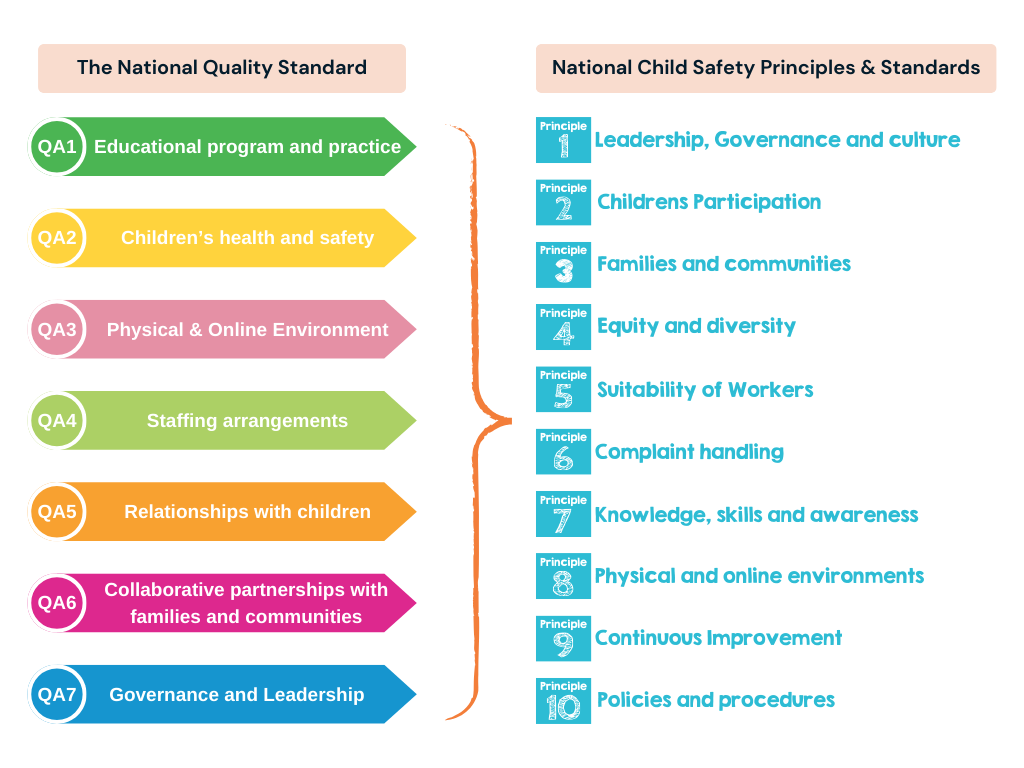
They align closely with:
-
The National Quality Framework (NQF)
-
The National Quality Standard (NQS)
-
Existing safeguarding expectations across the sector
Rather than introducing completely new ideas, they strengthen and formalise what best practice should already look like.
The 10 Child Safe Standards (Simplified)
Here’s a practical interpretation for ECEC services:
1. Child safety is embedded in leadership, governance, and culture
Child safety is not a document — it’s visible in everyday decisions.
2. Children participate in decisions affecting them
Children’s voices are actively sought, heard, and respected.
3. Families and communities are informed and involved
Partnerships are transparent and collaborative.
4. Equity is upheld and diverse needs are respected
All children feel safe, included, and represented.
5. People working with children are suitable and supported
Recruitment, training, and supervision prioritise safety.
6. Processes to respond to complaints and concerns are child-focused
Clear, accessible, and taken seriously.
7. Staff are equipped with knowledge, skills, and awareness
Ongoing training and reflection are essential.
8. Physical and online environments minimise risk
Spaces are intentionally designed for safety.
9. Implementation is regularly reviewed and improved
Continuous reflection and improvement are expected.
10. Policies and procedures document child-safe practice
Clear, accessible, and actively used — not just stored.
How This Changes Practice in Services
The biggest shift is this:
From compliance → to culture
It’s no longer enough to:
-
Have policies in place
-
Complete checklists occasionally
Services are now expected to show:
-
How child safety is embedded daily
-
How educators actively reflect and respond
-
How children’s rights and voices are visible in practice
What This Looks Like Day-to-Day
You may notice increased focus on:
-
Actively capturing children’s voices
-
Reflecting on supervision and environmental risks
-
Recording decision-making processes
-
Strengthening communication with families
-
Ongoing team discussions around child safety
Showing Evidence of Child Safe Practice Using Your Butler Diaries
One of the most common challenges is:
“We’re doing this — but how do we show it clearly?”
Your existing documentation systems can already capture this — when used intentionally.
1. Weekly Programming and Reflection Diary
This is one of your strongest tools for showing ongoing, embedded practice.
Where Child Safe Standards Show Up:
-
Reflections:
-
Adjustments to supervision
-
Responding to children’s needs
-
-
Evidence of Learning:
-
Children expressing feelings, boundaries, or preferences, supported by the Children's Voices Diary
-
Social and emotional development, captured in your Individual Observation Duplicate Book
-
-
Planning:
-
Intentional teaching around safety, consent, relationships
-
Example:
“Children began discussing personal space during group time. Educators introduced language around consent and respectful interactions. Ongoing support planned through role play experiences.”
✔ Links to:
-
Child participation (Standard 2)
-
Safe environments (Standard 8)
-
Intentional teaching (QA1)

2. Educational Leader Diary
This is where leadership and continuous improvement become visible.
Use it to document:
-
Team reflections on child safety practices
-
Staff discussions and meeting notes
-
Identified risks and action plans
-
Professional development focus areas
Example:
“Team identified inconsistent language around children’s consent. Agreed to implement shared language approach and revisit in next meeting.”
✔ Links to:
-
Leadership and culture (Standard 1)
-
Staff capability (Standard 7)
-
Continuous improvement (Standard 9)

3. Children’s Centre or Service-Level Diaries
These include the Children's Centre Diary, Nominated Supervisor Diary, and OSHC Diary and help capture whole-service evidence.
Record:
-
Visitor logs and access tracking
-
Incidents and follow-up actions
-
Environmental safety checks
-
Communication with families
Example:
“Outdoor gate identified as not consistently closing securely. Maintenance action logged and temporary supervision plan implemented.”
✔ Links to:
-
Safe environments (Standard 8)
-
Governance and response (Standard 6)

4. Visitor Logs and Compliance Records
With the 2026 changes, visitor tracking becomes even more important.
Ensure logs include:
-
Full name
-
Time in/out
-
Reason for visit
-
Verification (e.g. Blue Card where required)
This supports:
-
Accountability
-
Risk management
-
Compliance with child-safe expectations

5. Critical Reflection Tools and Checklists
Use structured prompts to guide deeper thinking:
-
Are children’s voices genuinely influencing decisions?
-
Where are risks in our environment?
-
How do we know children feel safe here?
These reflections become powerful evidence during Assessment and Rating.

A Practical Example Across One Week
Instead of separate “child safe” documentation, evidence is embedded:
-
Monday: Reflection notes adjustment to supervision
-
Tuesday: Children’s voices recorded about feeling safe
-
Wednesday: Team discussion documented in leader diary
-
Thursday: Environment risk identified and addressed
-
Friday: Planning includes intentional teaching on boundaries
This is what embedded practice looks like.
The Key Shift: Evidence is Everyday Practice
You are not expected to create:
-
Extra folders
-
Separate “child safe” documents
-
Additional workload
Instead, you are expected to show:
✔ Ongoing reflection
✔ Intentional decision-making
✔ Children’s voices
✔ Responsive practice
Final Reflection
The Child Safe Standards are not about adding more.
They are about making visible what matters most:
-
Children’s safety
-
Children’s rights
-
Educators’ professional judgement
When your documentation reflects:
-
what you noticed
-
what you did
-
why you did it
—you are already building strong, clear evidence.
Related Articles
- Child Safe Standards Compliance Checklist
- What counts as evidence of learning (with examples mapped to EYLF)
-
Upcoming Child Safety Regulations – What ECEC Services Need to Know by 1 September 2025
-
Ultimate Guide to Incident Reporting in Childcare
-
NQS 2026 Updates and 2025 Policy Guidelines: Downloadable Resources
- 10 Ways to Be Safer with Photographs in Early Childhood Education and Care