
Download Sustainability Audit: The Three Dimensions of Sustainability in ECEC
Sustainability in Early Childhood Education and Care is about far more than recycling activities. Explore the three dimensions of sustainability in EYLF and MTOP V2.0, practical examples for daily practice, and how services can make sustainability visible through intentional programming, reflection, leadership, and community connections. Includes a free Sustainability Audit download for educators and leaders.

Sustainability in Early Childhood Education and Care is often associated with recycling, gardening, or environmental activities. While these are important, sustainability within the approved learning frameworks is much broader than occasional “green” experiences.
In practice, sustainability is about creating thoughtful, respectful, and responsible ways of working that can be maintained over time — for children, educators, families, communities, and the environment.
Within both Belonging, Being and Becoming: The Early Years Learning Framework for Australia V2.0 and My Time, Our Place V2.0, sustainability is embedded across daily practice, decision-making, relationships, environments, and community connections.
Strong sustainability practice is not built through one-off themed activities. It becomes visible through the everyday choices educators and leaders make:
- how environments are designed
- how resources are used
- how children are included in decision-making
- how families and communities are engaged
- how educator wellbeing is supported
- how services create realistic and sustainable systems
Many services are already engaging in meaningful sustainability practices without recognising the depth of what they are doing. The challenge is often making those practices intentional, consistent, and visible.
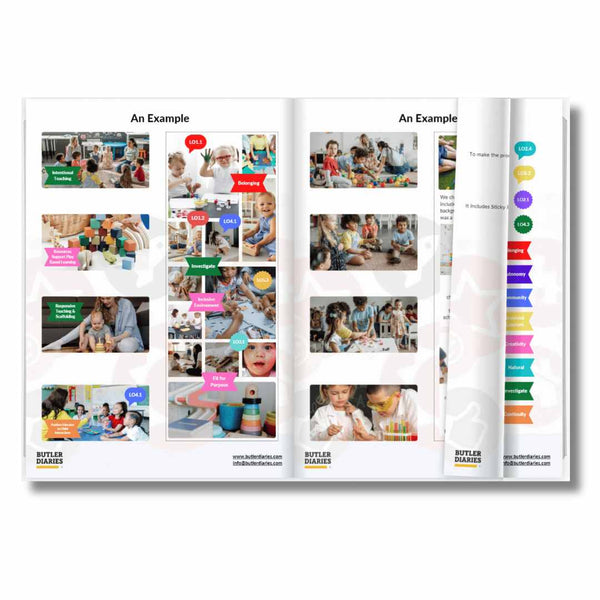
One way to show embedded practice is to use a tool like the Weekly Programming and Reflection Diary to capture programmed experiences, routines, and reflections around embedded sustainable practice.
You can use the free downloadable Sustainability Audit at the end of the article.

What Does Sustainability Mean in ECEC?
Sustainability in Early Childhood Education and Care refers to practices that support the wellbeing of people, communities, cultures, and environments both now and into the future.
The approved learning frameworks encourage educators to help children develop:
- respect for environments
- social responsibility
- ethical understandings
- community connection
- agency and participation
- awareness of interdependence
- understanding of caring for shared resources and spaces
Importantly, sustainability is not treated as a stand-alone topic within quality practice. It is woven throughout:
- educational programs
- critical reflection
- intentional teaching
- environment design
- routines
- leadership
- family partnerships
- community engagement
This means sustainability can look very different from service to service depending on context, community, age groups, philosophies, and priorities.
The Three Dimensions of Sustainability
One of the biggest misconceptions in ECEC is that sustainability only refers to environmental practices. In reality, sustainability includes three interconnected dimensions:
- environmental sustainability
- social sustainability
- economic sustainability
When these dimensions work together, services are more likely to create practices that are realistic, meaningful, and maintainable over time.
Environmental Sustainability in ECEC
Environmental sustainability focuses on caring for natural environments and using resources responsibly.
In Early Childhood Education and Care, this is often the most visible dimension of sustainability because it connects naturally to everyday experiences and children’s curiosity about the world around them.
However, environmental sustainability is much deeper than simply completing recycling activities or celebrating environmental awareness days.
It involves helping children develop respectful relationships with the natural world and understand that people, animals, plants, resources, and environments are interconnected.
What Environmental Sustainability Can Look Like in Practice
Environmental sustainability may include:
- composting systems
- gardening projects
- water conservation
- reducing unnecessary waste
- reusing loose parts and recycled materials
- repairing resources instead of replacing them
- sustainable purchasing decisions
- energy-saving routines
- nature play
- discussions about caring for animals and habitats
- exploring local environments and natural spaces
- reducing excessive printing and laminating
- using natural and open-ended materials
- involving children in caring for shared environments
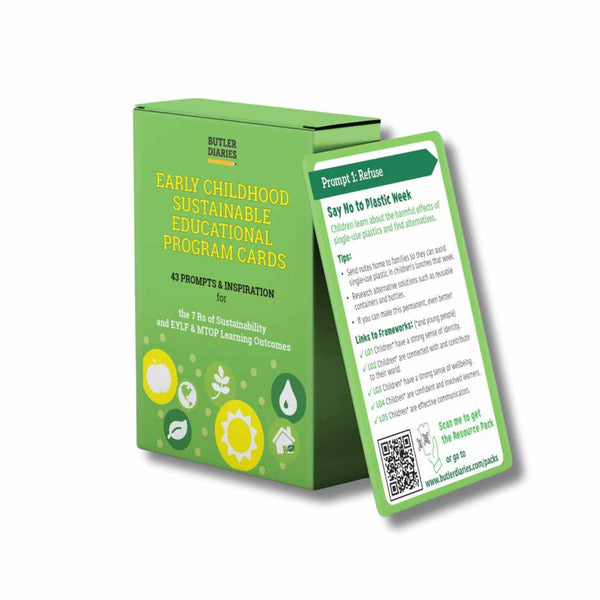
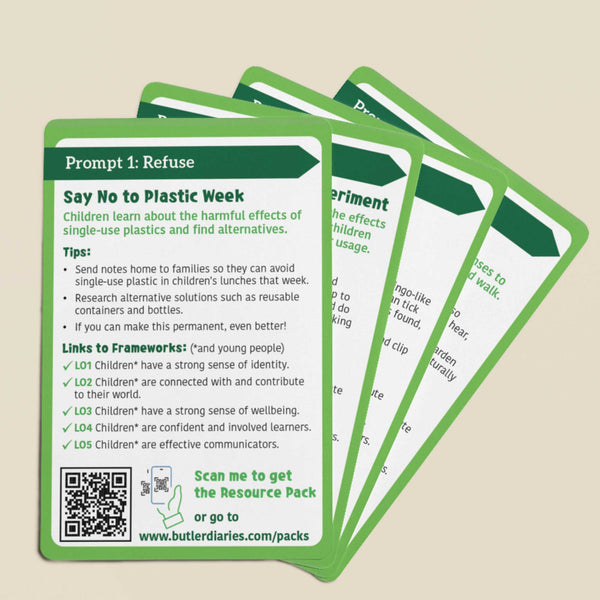
You can use tools like Program Prompt Cards to explore sustainability experiences relevant to your context with experience, links to frameworks, and free digital resource library with instructions and templates.

Strong sustainability practice is often embedded into routines rather than isolated into special events.
For example:
- children helping care for gardens daily
- educators discussing water use during handwashing
- services reviewing purchasing decisions to reduce waste
- children participating in caring for indoor plants
- loose parts being reused creatively across the program
These everyday experiences often create more meaningful learning than isolated “environmental craft” activities.
You can use tools like the Our Sustainable Year Wall Calendar to show how experiences and children's learning grow over time into embedded routines and practices.
Reflective Question
Are sustainable practices embedded into our daily routines and environments, or only explored occasionally?
Social Sustainability in ECEC
Social sustainability focuses on relationships, inclusion, fairness, wellbeing, participation, and community connection.
This dimension is highly relevant within Early Childhood Education and Care because quality practice relies heavily on respectful relationships and collaborative communities.
Social sustainability supports environments where:
- children feel safe and valued
- families feel included
- educators feel supported
- diverse perspectives are respected
- communities are strengthened over time
Within the approved learning frameworks, this links closely to:
- belonging
- identity
- agency
- inclusion
- collaboration
- cultural responsiveness
- community participation
What Social Sustainability Can Look Like in Practice
Social sustainability may include:
- building respectful relationships
- supporting children’s agency and voice
- inclusive environments and practices
- culturally responsive programming
- family and community engagement
- collaborative problem-solving
- shared leadership
- emotional wellbeing support
- ethical discussions with children
- creating welcoming spaces for families
- reflective conversations with educators
- supporting sustainable educator workloads and wellbeing
This dimension is particularly important because services cannot sustain quality practice if educators themselves are overwhelmed, unsupported, or disconnected.
In many services, sustainability conversations focus heavily on environmental projects while overlooking educator wellbeing and sustainable systems.
Yet sustainable practice also means:
- realistic expectations
- manageable documentation systems
- intentional rather than excessive paperwork
- reflective practices that support improvement without burnout
Educators can show social sustainability in their Weekly Programming and Reflection Diary and leaders can show their focus on social sustainability in their Educational Leader Diary and Nominated Supervisor Diary. While the service as a whole can record these experiences in the Our Sustainable Year Wall Calendar on a room and service level.

Reflective Question
Does our approach to sustainability also support sustainable educator practice and wellbeing?
Economic Sustainability in ECEC
Economic sustainability is sometimes misunderstood within education settings.
In ECEC, economic sustainability is not about profit-driven decision-making. Instead, it focuses on using resources thoughtfully to support long-term quality practice.
This includes considering how services can maintain effective systems, environments, and practices over time without creating unnecessary waste, duplication, or pressure.
Our Sustainable Educational Program Cards Deck 2 focuses on the 3 dimensions of sustainability and how to explore them with children.

What Economic Sustainability Can Look Like in Practice
Economic sustainability may include:
- maintaining resources carefully
- choosing versatile open-ended materials
- thoughtful purchasing decisions
- reducing unnecessary waste
- long-term planning
- sustainable rostering systems
- investing in quality resources that last
- reducing duplicated documentation
- streamlining systems and processes
- creating realistic workloads for educators
- reviewing practices that create unnecessary pressure
Sometimes services unintentionally create unsustainable systems through:
- excessive paperwork
- duplicated documentation
- unclear expectations
- inconsistent programming systems
- unnecessary resource spending
- overcomplicated processes
Sustainable systems should support educators to spend more meaningful time with children rather than increasing administrative burden.
Reflective Question
Are our systems realistic, maintainable, and supportive of long-term quality practice?
Sustainability in EYLF V2.0
Within Belonging, Being and Becoming: The Early Years Learning Framework for Australia V2.0, sustainability is embedded throughout children’s learning and development.
The framework encourages educators to support children in becoming socially responsible and showing respect for environments and communities.
This includes helping children:
- develop connections with the natural world
- understand interdependence
- participate in decision-making
- contribute to shared environments
- engage with community and Country
- explore ethical understandings
- develop awareness of fairness and responsibility
Importantly, sustainability within EYLF V2.0 is not limited to environmental experiences.
It can also be visible through:
- children’s voices and participation
- collaborative learning
- respectful relationships
- community projects
- cultural learning
- inquiry-based projects
- long-term investigations
- intentional teaching
- critical reflection
Sustainability learning often becomes strongest when children are actively involved in real decision-making and meaningful participation.
Sustainability in MTOP V2.0
Within My Time, Our Place V2.0, sustainability is connected to:
- community responsibility
- inclusion
- participation
- environmental responsibility
- social justice
- agency and voice
In OSHC settings, sustainability often works best through practical and collaborative approaches.
Examples may include:
- children leading sustainability projects
- community initiatives
- gardening and cooking projects
- repair and reuse stations
- collaborative planning
- leadership opportunities
- fundraising or community support projects
- environmental action projects
- shared decision-making
Older children are often highly capable of contributing ideas, identifying problems, and leading meaningful sustainability initiatives when given genuine opportunities to participate.

What Sustainability Really Looks Like in Daily Practice
One of the most valuable shifts services can make is moving from viewing sustainability as a “topic” to recognising it as a way of working.
Sustainability can become visible through:
- routines
- environments
- relationships
- conversations
- planning
- reflection
- leadership decisions
- documentation systems
- family engagement
- resource choices

Practical Examples
Sustainability in practice may include:
- reusing documentation displays rather than remaking them constantly
- involving children in caring for environments
- slowing down planned experiences to allow deeper inquiry
- using natural and open-ended materials
- creating repair stations for resources
- reviewing whether documentation expectations are realistic
- using sustainable loose parts in play
- cooking with produce from gardens
- family sustainability projects
- documenting children’s ideas and questions over time
- reducing unnecessary printing
- reflecting on educator workload sustainability
- embedding sustainability into ongoing project work
Often, the strongest sustainability practices are the ones that become part of everyday culture rather than isolated experiences.
Common Sustainability Mistakes in ECEC
Many sustainability practices are well-intentioned but remain surface-level because they focus only on visible environmental activities.
Common Mistakes Include:
- treating sustainability as only recycling
- relying on one-off themed activities
- creating displays without genuine child involvement
- focusing only on environmental sustainability
- over-documenting sustainability experiences
- overlooking educator wellbeing
- creating unsustainable programming expectations
- doing sustainability “to” children instead of with them
- separating sustainability from daily routines and practice
Sometimes the most sustainable change a service can make is simplifying systems so educators can spend more meaningful time connecting with children.
Tools like Our Sustainable Year Wall Calendar can show how programmed experiences are adapting into larger projects and embedded practice. Ongoing links can be referenced back in the Weekly Programming and Reflection Diary to show consistency.
Making Sustainability Visible
Many services are already engaging in strong sustainability practices but struggle to clearly identify and reflect on them.
Sustainability can be made visible through:
- programming documentation
- reflective practice
- critical reflection discussions
- children’s voices
- QIP goals
- environment planning
- meeting records
- professional goals
- community engagement projects
- evidence of long-term change over time
Documentation does not need to become excessive to demonstrate sustainability practice.
Meaningful evidence may include:
- reflective notes
- educator discussions
- children’s contributions
- photographs
- learning stories
- mind maps
- planning records
- community feedback
- ongoing project documentation
The goal is not to create more paperwork. The goal is to make intentional practice visible.
Free Sustainability Audit for ECEC Services
Not sure where your service currently sits with sustainability practice?
Our free Sustainability Audit is designed to help educators and leaders:
- reflect on current practice
- identify strengths and gaps
- explore all three dimensions of sustainability
- connect sustainability to EYLF and MTOP V2.0
- support critical reflection and QIP discussions
- strengthen sustainability across the service in practical and realistic ways
The audit can be used for:
- Educational Leader discussions
- staff meetings
- sustainability planning
- QIP reflection
- team professional development
- Assessment and Rating preparation
- reflective practice conversations
Download the free Sustainability Audit and start exploring practical ways to strengthen sustainability in your service.