
Management Systems Under the NQS: Free Checklist - Are Your Systems Actually Working?
Having policies and procedures is only part of effective management under the NQS. Explore how Early Childhood Education and Care services can review their management systems, strengthen everyday practice and identify improvements without creating unnecessary paperwork and download your free checklist.

Having policies and procedures is one thing. Knowing they are understood, consistently implemented and effective is another.
Every Early Childhood Education and Care (ECEC) service has management responsibilities.
Policies need reviewing. Records need maintaining. Risks need identifying and managing. Families need clear communication, educators need guidance, and regulatory responsibilities need to be met.
But when was the last time your service stopped to consider whether its management systems are actually working?
Download the Free resource: Management Systems Self-Review Checklist at the end of this article.
Not simply whether the required documents exist, but whether the systems behind them are understood, consistently followed and helping your service operate effectively.
Under the National Quality Standard (NQS), Element 7.1.2 – Management systems requires services to have systems that manage risk and support the effective operation of a quality service that is child safe.
And with management systems now the most commonly assessed Not Met NQS element in ACECQA's Q3 2026 data, it's an important area for services to reflect on.
In our article, Why Management Systems Are Now the Most Commonly Not Met NQS Element, we explore the broader sector findings.
Here, we're looking at something more practical: how can you tell whether your management systems are doing what they're supposed to do?
What does an effective management system look like?
Management systems are not necessarily one document, one software program or one set of procedures.
They are the connected processes a service uses to manage its responsibilities, support staff, respond to concerns, protect children and maintain quality operations.
ACECQA's Guide to the National Quality Framework identifies several important aspects of Element 7.1.2, including:
-
Efficient and effective management systems
-
Confidentiality and records management
-
Administrative systems
-
Complaints and grievances management
-
Notifications to the regulatory authority
-
Risk management and workforce suitability
-
Documented policies and procedures
An effective system should help the right people understand what needs to happen, when it needs to happen, who is responsible and how concerns or improvements will be followed up.
For example, a service might have a policy review schedule. But the effectiveness of that system depends on more than completing the review.
It also depends on whether relevant changes are communicated, staff understand their responsibilities, and the updated procedure is implemented in practice.
That is the difference between maintaining documentation and managing a functioning system.

Five questions to ask about every management system
One way to review your existing systems is to consider five connected questions.
| Question | What to look for |
|---|---|
| 1. Is it established? | Is there a clear, appropriate process, policy or procedure? |
| 2. Is it understood? | Do the people responsible know what is expected of them? |
| 3. Is it implemented? | Does everyday practice reflect the established process? |
| 4. Is it monitored? | Can the service identify whether the system is working or where gaps exist? |
| 5. Is it improved? | Are concerns, feedback and review findings used to strengthen practice? |
These five questions are a suggested self-review approach, not a separate ACECQA assessment tool.
They can help services move beyond asking whether a document exists and begin examining whether the system is achieving its intended purpose.

1. Are your policies and procedures understood and followed?
Policies and procedures provide important guidance for service operations.
However, their effectiveness depends on how they are communicated and implemented.
Consider a service that has recently updated its delivery and collection of children policy.
The document has been reviewed, approved and made available to staff.
But do educators know what has changed?
Have casual and relief educators received the relevant information?
Are families informed where required?
Does the service have a way of identifying whether the updated procedure is being followed?
ACECQA's assessment guidance for Element 7.1.2 includes consideration of whether service practices are consistent with documented policies and procedures.
It also addresses how families and educators are informed about policies and changes.
Practical ways to strengthen this area
-
Make policies accessible to the people who need them.
-
Clearly communicate changes and explain their implications for everyday practice.
-
Include relevant procedures in staff induction and ongoing professional learning.
-
Consider how casual, relief and newly appointed educators receive information.
-
Use team discussions, observations and feedback to identify whether procedures are understood and implemented.
-
Review policies when incidents, changes or feedback indicate that improvements may be needed.
- Use a tool that prompts and records all this information.

Reflection question: If an authorised officer asked an educator how a particular procedure works, would their explanation reflect the service's documented process and everyday practice?
2. Are responsibilities clear, including when people are absent?
Many management systems involve responsibilities shared between approved providers, nominated supervisors, responsible persons, educational leaders, coordinators and educators.
Some responsibilities are established by legislation, while others relate to the service's operational arrangements.
Clear responsibility allocation is particularly important when regular staff are absent or responsibilities change.
For example, who follows up an identified maintenance concern?
Who checks that a required notification has been submitted?
Who ensures a newly updated procedure has been communicated to all relevant staff?
Who monitors whether an improvement action has been completed?
If these responsibilities are unclear, a task may be overlooked even when the service has an appropriate policy.
Practical ways to strengthen this area
Consider using a simple responsibility and follow-up process that identifies:
-
The task or responsibility
-
The person accountable
-
Any required timeframe
-
How completion or follow-up will be confirmed
-
What happens when the responsible person is unavailable
This does not need to become another lengthy register.
The important consideration is that responsibilities are understood and necessary actions are completed.
Role-specific Diaries can ensure each member is tracking their responsibilities and keeping a record of practice.

Reflection question: Could someone stepping into a leadership role tomorrow identify what needs attention, what has already been completed and what remains outstanding?
3. Do your risk management systems lead to action?
Risk management is a central part of Element 7.1.2, particularly in supporting a child-safe service.
Effective risk management involves more than identifying potential hazards or completing risk assessments.
Services also need to consider how identified risks are addressed, communicated, monitored and reviewed.
Example: A recurring supervision concern
Educators notice that a particular outdoor area becomes difficult to supervise during transitions.
The concern is raised with service leadership.
The service reviews the supervision arrangements, considers relevant risks and identifies appropriate changes.
These might involve adjustments to educator positioning, transition procedures or the organisation of the environment.
Educators are informed of the changes, and the service checks whether the revised arrangements are effective.
The management system supports the complete process:
Identify the concern → Assess the risk → Take appropriate action → Communicate changes → Review effectiveness.
The outcome is not simply a completed risk assessment.
It is a considered response that helps strengthen children's safety.
Practical ways to strengthen this area
-
Establish clear processes for reporting risks and concerns.
-
Ensure identified risks are assessed and managed appropriately.
-
Allocate responsibility for required actions.
-
Communicate relevant changes to the people affected.
-
Review controls when circumstances change or concerns continue.
-
Consider whether incidents, near misses and feedback reveal broader system weaknesses.

Reflection question: When a risk is identified at your service, how do you know that the necessary action has been completed and remains effective?
4. Are your records accurate, secure and useful?
ECEC services are required to maintain a range of records under the National Law and National Regulations.
These include records relating to enrolment, attendance, incidents, medication and other operational responsibilities.
ACECQA's guidance for Element 7.1.2 addresses the currency, confidentiality, accessibility, storage and retention of records.
Effective records management is therefore about more than keeping documents together.
Services need systems that help ensure information is accurate, appropriately maintained and accessible to authorised people when required.
This includes considering how personal information, photographs and videos of children are managed securely.
Practical ways to strengthen this area
-
Review how required records are created, checked, stored and retained.
-
Ensure authorised staff understand how to access information relevant to their responsibilities.
-
Check that confidentiality and privacy protections are maintained.
-
Review arrangements for digital records and devices, including children's images and videos.
-
Establish processes for identifying missing, outdated or incomplete information.
-
Ensure required records and notifications are maintained in accordance with applicable legislation.

Reflection question: If an authorised person needed a required record today, could it be located promptly, and would the information be accurate and appropriately protected?
5. Do complaints and feedback lead to meaningful follow-up?
Complaints and feedback can provide valuable information about how a service's systems are functioning.
ACECQA's guidance emphasises that complaints and grievances should be taken seriously and investigated appropriately.
A child-focused complaints management process should support children, families and others to raise concerns and have them addressed.
Example: A family communication concern
A family raises a concern that important information about their child's day is not being consistently communicated.
The service responds through its complaints process and considers whether the issue reflects an isolated communication breakdown or a broader gap in practice.
Following discussion with relevant educators, the service identifies an opportunity to improve how information is shared during transitions between staff.
The revised approach is communicated, implemented and reviewed.
The complaint has not simply been closed.
It has provided an opportunity to examine and strengthen a management process.
Practical ways to strengthen this area
-
Ensure children, families and staff have appropriate ways to raise concerns.
-
Respond to complaints promptly and in accordance with relevant requirements.
-
Document and investigate complaints appropriately.
-
Consider whether concerns reveal gaps in policies, procedures or implementation.
-
Communicate outcomes and changes where appropriate, while maintaining confidentiality.
-
Review whether changes have addressed the identified concern.
- Use a consistent communication tool to ensure the whole team is on the same page.

Reflection question: Can your service identify examples where feedback or complaints have led to improvements in everyday practice?
6. Are your systems supporting a child-safe culture?
Child safety must be embedded throughout service governance and operations.
Changes to the NQF effective from 1 January 2026 explicitly strengthened the child safety focus of Standard 7.1 and Element 7.1.2.
This means child safety should be considered across management systems, including risk management, workforce suitability, complaints, reporting, records and digital technologies.
For example, a service may have an online safety policy.
But effective implementation also requires relevant staff to understand expectations for using digital devices, managing children's images and videos, protecting information and responding to concerns.
The service needs to consider how these arrangements are communicated, monitored and reviewed.
Child safety should not depend on one person remembering what needs to happen.
It should be supported by clear, consistently implemented systems.
For further guidance, refer to ACECQA's NQF child safety changes and the current Guide to the NQF.
How do you know whether improvements are working?
An important part of effective management is reviewing whether actions have achieved their intended outcome.
Consider the following examples:
| Identified issue | Action taken | How effectiveness could be reviewed |
|---|---|---|
| Educators are unclear about an updated procedure | Communicate changes and provide relevant guidance | Discuss the procedure with educators and observe implementation |
| Supervision concerns arise during transitions | Review risk controls and adjust arrangements | Observe transitions and seek educator feedback |
| Required records are sometimes incomplete | Clarify responsibilities and review the recording process | Check records for accuracy and completeness |
| Family communication is inconsistent | Review communication expectations and processes | Seek family and educator feedback |
| Improvement actions are not consistently followed up | Introduce clear responsibility and review arrangements | Check whether actions are completed and issues resolved |
The purpose of reviewing effectiveness is not to generate evidence for its own sake.
It is to determine whether a change has improved practice and whether further adjustments are needed.
Using existing routines instead of creating more paperwork
One of the most useful questions a service can ask is:
Can we strengthen this system using something we already do?
For example, a service might already have regular leadership meetings, team discussions, risk reviews, policy schedules and quality improvement processes.
Rather than introducing separate documentation for every concern, these existing routines can provide opportunities to monitor responsibilities and follow up actions.
A leadership meeting might include a brief review of outstanding actions.
A policy review might identify professional learning needs.
A team discussion might reveal that a procedure is unclear or difficult to implement.
A Quality Improvement Plan might capture a significant improvement priority and the progress made towards achieving it.
The goal is to establish consistent, purposeful processes that support quality practice without unnecessarily increasing administrative work.
|
Having a system |
Knowing the system works |
|---|---|
|
A policy exists |
Educators understand and follow it |
|
A risk assessment is completed |
Identified controls are implemented and reviewed |
|
A complaint is recorded |
The concern is addressed and any necessary improvements followed up |
|
Responsibilities are allocated |
Tasks are completed and accountability is clear |
|
A record is maintained |
Information is accurate, current, secure and accessible when required |
How the Nominated Supervisor Diary can support everyday management
Nominated supervisors and service leaders often manage multiple responsibilities throughout the day.
Keeping track of these responsibilities can be challenging, particularly when priorities change or unexpected issues arise.
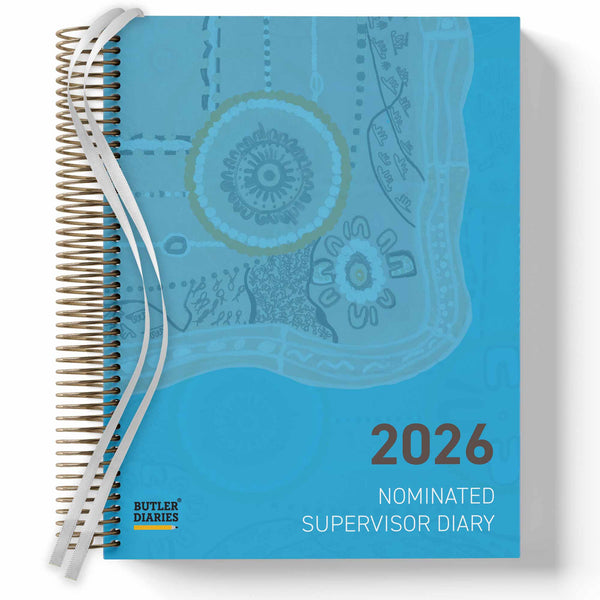
The Nominated Supervisor Diary is designed specifically for this role, with features including:
-
A weekly nominated supervisor checklist
-
Policy and philosophy review tracking
-
Monthly professional goals and meeting notes
-
Quality improvement planning sections
-
Daily space for meetings, training, to-dos and general notes
These features can support a more organised approach to monitoring responsibilities and following up management activities.
For example, a nominated supervisor might use their Diary to note when a policy review is due, record a follow-up action from a leadership meeting or plan time to review progress against a quality improvement goal.
The Diary complements the service's established management systems. It does not replace mandatory records, formal risk assessments, required notifications or the approved provider's regulatory responsibilities.
The aim is to make everyday management more manageable, with clear priorities and a consistent place to organise follow-up.
Start with a management systems self-review
If your service is considering how to strengthen Element 7.1.2, you do not necessarily need to begin with a complete overhaul of existing processes.
Start by reviewing what is already in place.
Choose one management area and ask:
-
What system do we currently use?
-
Who is responsible for implementing and monitoring it?
-
How do we know it is understood and followed?
-
What evidence or feedback tells us whether it is working?
-
What, if anything, needs to change?
These questions can help identify practical improvements without creating unnecessary additional documentation.
Download the Free resource: Management Systems Self-Review Checklist at the end of this article.
Use our companion checklist to examine key areas of management practice, identify strengths and gaps, and plan practical follow-up actions.
Effective systems support quality practice
The latest ACECQA data reminds us that management systems remain an important area for attention across Early Childhood Education and Care.
But strengthening management systems does not necessarily mean introducing more policies, more registers or more paperwork.
It means making sure the systems already in place are understood, consistently implemented and regularly reviewed.
When responsibilities are clear, risks are appropriately managed, concerns are followed up and improvements become part of everyday practice, management systems can do what they are intended to do.
Support educators, protect children and help services deliver quality education and care.
Related Articles
- Not Met NQS: What the Data Tells Us About the Areas Services Are Finding Hardest
- Why Management Systems Are Now the Most Commonly Not Met NQS Element
- Solving Time Management Issues in Early Childhood
- Common Leadership Problems in ECE and How to Solve Them
- A Deep Dive into the Nominated Supervisor Diary