QKLG 2024 Learning and Development Areas Explained: A Complete Guide for Queensland Kindergarten Educators

Understanding the Queensland Kindergarten Learning Guideline, its five learning and development areas, key focuses, continua, and practical application in programming and assessment.
The Queensland Kindergarten Learning Guideline (QKLG) supports teachers and educators to plan meaningful learning experiences, recognise children's progress and make informed decisions about their learning, development and wellbeing.
For Queensland kindergarten educators, understanding the QKLG involves more than identifying learning outcomes. It means recognising children's strengths, interests, capabilities and ways of learning, then using this information to inform intentional teaching, assessment and ongoing planning.
The QKLG 2024 provides guidance across five interconnected learning and development areas, supported by key focuses, significant learnings and continua that describe how children may demonstrate their learning in different situations.
This guide explores the QKLG 2024, explains each learning and development area and its key focuses, and considers how educators can use the framework to support everyday programming, documentation and critical reflection.
What is the Queensland Kindergarten Learning Guideline (QKLG)?
The Queensland Kindergarten Learning Guideline is developed by the Queensland Curriculum and Assessment Authority (QCAA).
It provides guidance for planning, documenting and assessing children's learning and development during their kindergarten year, as well as sharing information with parents and carers and supporting continuity of learning into school.
The kindergarten year in Queensland is the year before Prep.
The QKLG recognises children as capable and active learners who bring their own experiences, knowledge, cultures, languages and interests into the kindergarten environment.
It supports educators to develop responsive, play-based programs that promote children's holistic learning, development and wellbeing.
The current edition is the QKLG 2024, which aligns with the Early Years Learning Framework V2.0 (EYLF V2.0).
Official framework: Queensland Kindergarten Learning Guideline 2024 – QCAA

What changed in the QKLG 2024?
The QKLG 2024 updated the previous 2018 guideline, including its alignment with EYLF V2.0.
Important revisions include:
-
Updated Principles and Practices.
-
Revised learning and development area descriptions.
-
Refined key focuses and significant learnings.
-
Updated examples of observable learning.
-
Additional critical reflection considerations.
-
Revised guidance for using the continua of learning and development.
-
Updated guidance supporting transitions and continuity of learning.
The changes help educators connect curriculum decision-making with contemporary understandings of children's learning, development and wellbeing.
Educators familiar with the 2018 guideline should use the current 2024 edition when reviewing their programming, assessment and documentation approaches.
You can learn more about the changes in our article: 2024 Revisions to the QKLG: What's New?
What are the five QKLG learning and development areas?
The QKLG identifies five interconnected learning and development areas:
-
Identity
-
Connectedness
-
Wellbeing
-
Active learning
-
Communicating
These areas align with the five learning outcomes of EYLF V2.0, while providing Queensland-specific guidance for the kindergarten year.
| QKLG 2024 learning and development area | Corresponding EYLF V2.0 outcome |
|---|---|
| Identity | Outcome 1: Children have a strong sense of identity |
| Connectedness | Outcome 2: Children are connected with and contribute to their world |
| Wellbeing | Outcome 3: Children have a strong sense of wellbeing |
| Active learning | Outcome 4: Children are confident and involved learners |
| Communicating | Outcome 5: Children are effective communicators |
Each area includes key focuses and significant learnings, with observable learning described across three phases of the continua.
The areas are interconnected. A single experience may demonstrate learning across several areas, and educators should consider children's learning holistically rather than treating each area as a separate subject.
QKLG Learning and Development Area 1: Identity
Aligned with EYLF V2.0 Outcome 1: Children have a strong sense of identity.
Identity focuses on children's developing understanding of themselves, their sense of belonging, confidence, independence and relationships.
The QKLG recognises that identity is influenced by children's cultures, families, kinship networks, communities, relationships and experiences.
Children develop their sense of identity as they build trusting relationships, explore their capabilities, make decisions and recognise their own strengths.
The three Identity key focuses
1. Building a sense of security and trust
Children develop confidence in their relationships and recognise that others can provide support.
Significant learning includes developing trust, feeling secure and seeking assistance when needed.
2. Acting with independence and perseverance
Children develop agency, make decisions, approach challenges and work towards goals.
Significant learning includes increasing independence, persistence and recognising the relationship between effort and achievement.
3. Building a confident self-identity
Children develop an understanding of their identities, strengths, cultures and capabilities.
Significant learning includes sharing personal and cultural experiences, recognising achievements and developing confidence in their abilities.
Practical example: Developing independence and perseverance
A child repeatedly attempts to complete a challenging puzzle.
Initially, the educator provides modelling and encouragement. As the child becomes familiar with the task, they begin trying different strategies and eventually complete the puzzle with less assistance.
Rather than documenting only that the child completed the puzzle, the educator considers the child's persistence, developing confidence and level of support needed.
These observations can inform future opportunities for problem-solving and independent decision-making.
Critical reflection questions
-
How do our relationships and routines help children feel secure?
-
Are children given meaningful opportunities to make decisions?
-
How do we recognise and value children's cultural identities?
-
Do we acknowledge children's effort and developing strategies, rather than focusing only on the completed task?
Official reference: QKLG Identity learning and development area

QKLG Learning and Development Area 2: Connectedness
Aligned with EYLF V2.0 Outcome 2: Children are connected with and contribute to their world.
Connectedness explores children's relationships with others, understanding of diversity, participation in communities and connections with environments.
The QKLG recognises that children are active participants who can contribute to decisions, develop respectful relationships and learn about their responsibilities towards people and the world around them.
This includes recognising Aboriginal peoples' and Torres Strait Islander peoples' connections to Country and developing an understanding of environmental, social and economic sustainability.
The three Connectedness key focuses
1. Building positive relationships
Children develop relationships, cooperation and an understanding of responsibilities.
Significant learning includes engaging with others, considering different perspectives and participating in shared experiences.
2. Showing respect for diversity
Children develop awareness and respect for similarities and differences between people.
Significant learning includes recognising diversity, exploring different perspectives and developing awareness of stereotypes.
3. Showing respect for environments
Children develop understanding of their connections with environments and ways of caring for them.
This includes opportunities to explore sustainability and participate in meaningful environmental decisions.
Practical example: A child-led sustainability investigation
Children notice that the garden is drying out during hot weather.
They begin discussing why plants need water and how they might help.
The educator supports the children to investigate watering methods, observe changes and contribute ideas about caring for the garden.
Over several weeks, children revisit the project, discuss what has changed and consider new approaches.
The experience may demonstrate learning connected with environmental responsibility, collaboration, inquiry and communication.
Critical reflection questions
-
How do children contribute to decisions affecting their environment?
-
Are diverse cultures and perspectives meaningfully represented?
-
How are Aboriginal and Torres Strait Islander perspectives respectfully embedded?
-
Do sustainability experiences encourage genuine participation and ongoing learning?
Official reference: QKLG Connectedness learning and development area
QKLG Learning and Development Area 3: Wellbeing
Aligned with EYLF V2.0 Outcome 3: Children have a strong sense of wellbeing.
Wellbeing encompasses children's physical and mental health, emotional awareness, resilience, personal safety and developing physical capabilities.
The QKLG recognises the importance of safe, respectful relationships and individualised approaches that support children's wellbeing.
It also considers children's opportunities to develop healthy practices, physical coordination and strategies for responding to emotions and challenges.
The three Wellbeing key focuses
1. Building increasing autonomy and resilience
Children develop emotional awareness, strategies for regulating emotions, adaptability and persistence.
Educators can observe how children recognise and communicate feelings, respond to challenges and seek support.
2. Engaging with ways to be healthy and safe
Children develop awareness of practices that support their health, safety and wellbeing.
This includes opportunities to learn about personal safety, healthy routines and caring for themselves.
3. Building physical wellbeing
Children develop fine and gross motor capabilities, coordination, stability, control and confidence in movement.
Learning may be evident through outdoor play, movement, dance, construction and physical exploration.
Practical example: Building physical confidence
Children begin creating obstacle courses outdoors.
Some children confidently climb and balance, while others prefer to observe before attempting a challenge.
The educator considers each child's physical capabilities, confidence, individual needs and level of support.
As children revisit the experience, their movements, decisions and confidence may change.
These observations can inform adjustments to the environment and future opportunities for physical learning.
Critical reflection questions
-
How do we respond to children's individual emotional needs?
-
Are children supported to develop strategies for managing challenges?
-
Do our environments provide inclusive opportunities for physical activity?
-
How do we promote children's agency in health and safety decisions?
Official reference: QKLG Wellbeing learning and development area

QKLG Learning and Development Area 4: Active Learning
Aligned with EYLF V2.0 Outcome 4: Children are confident and involved learners.
Active learning focuses on children's curiosity, engagement, creativity, persistence, problem-solving and developing thinking skills.
The QKLG recognises that children deepen their understanding when they investigate ideas, experiment, revisit experiences and apply learning in different situations.
Play-based learning provides opportunities for children to explore their ideas while educators intentionally support and extend their thinking.
The three Active Learning key focuses
1. Building positive dispositions toward learning
Children develop curiosity, enthusiasm, confidence and positive approaches to learning.
Significant learning includes showing interest, engaging with experiences and developing willingness to investigate ideas.
2. Showing confidence and involvement in learning
Children develop problem-solving skills, explore possibilities, reflect on their learning and engage with challenges.
Educators may observe children testing ideas, adapting strategies and applying previous learning.
3. Engaging with technologies for learning and communication
Children explore technologies and their purposes in learning, play and communication.
This includes real and pretend technologies and opportunities to use appropriate tools to investigate and represent ideas.
Practical example: Investigating ramps
Children begin rolling toy vehicles down ramps made from blocks and boards.
They notice that some vehicles travel further than others and begin changing the height of the ramps.
The educator encourages predictions, provides time for repeated investigation and supports children to discuss what they notice.
The inquiry continues as children test different surfaces, materials and arrangements.
Rather than documenting only the activity, the educator considers children's curiosity, developing problem-solving strategies and ability to apply ideas.
Critical reflection questions
-
Are children given sufficient time to investigate and revisit ideas?
-
How do we encourage persistence and problem-solving?
-
Are our teaching interactions extending children's thinking?
-
Do children have opportunities to use technologies as active learners and creators?
Official reference: QKLG Active Learning learning and development area
QKLG Learning and Development Area 5: Communicating
Aligned with EYLF V2.0 Outcome 5: Children are effective communicators.
Communicating focuses on children's developing language, literacy and numeracy capabilities and the many ways they express ideas, interact and make meaning.
The QKLG recognises that children communicate in diverse ways, including spoken and signed languages, gestures, visual communication and augmentative and alternative communication.
It also recognises that literacy and numeracy develop through meaningful everyday experiences, play and interactions.
The three Communicating key focuses
1. Engaging with and expanding language
Children develop verbal and non-verbal communication, vocabulary and the ability to express ideas and understand others.
This includes recognising and valuing different communication approaches, home languages and communication needs.
2. Building literacy in personally meaningful ways
Children develop understanding of texts, language, symbols, reading and writing.
Learning may be evident through storytelling, conversations, mark-making, books, signs and meaningful interactions with print.
3. Building numeracy in personally meaningful ways
Children develop mathematical understanding through everyday experiences.
This includes number, patterns, measurement, space, spatial relationships and mathematical problem-solving.
Practical example: A pretend café
Children create a café using play materials.
They develop menus, negotiate roles, take orders, count items, use symbols to represent prices and communicate with one another.
The educator observes the different ways children use language, literacy and numeracy.
Further opportunities might include introducing additional writing materials, measuring resources or discussing how children could organise their café.
Critical reflection questions
-
Are all children's forms of communication recognised and valued?
-
How are home languages and communication differences supported?
-
Do literacy experiences have meaning within children's play?
-
Are children exploring mathematical concepts through relevant, everyday situations?
Official reference: QKLG Communicating learning and development area

Understanding the QKLG Continua of Learning and Development
One of the most important components of the QKLG 2024 is its continua of learning and development.
The continua support educators to observe, analyse and assess children's learning and use that information to make decisions about future teaching.
The continua describe three phases:
| Phase | Learning situation | Support |
|---|---|---|
| Emerging | Familiar situations | Explicit support |
| Exploring | Familiar situations | Occasional support |
| Extending | New situations | Occasional prompting |
These phases are not fixed labels for children.
A child may demonstrate learning more like one phase in one context and another phase in a different context.
The QKLG recognises that learning may move between phases over time, depending on the situation and the support available.
How should educators use the continua?
Educators consider evidence of children's learning, including:
-
What learning was demonstrated?
-
Was the situation familiar or new?
-
What level of support did the child need?
-
How does the evidence compare with the observable learnings?
-
What teaching decisions could support continued development?
The QKLG describes making a professional judgement about which phase the learning is more like, rather than treating the phases as rigid developmental categories.
Example: Assessing learning using the continua
Imagine a child who is developing confidence in joining group play.
In a familiar environment, the child participates when an educator provides ongoing support.
Over time, the child begins joining familiar peers with occasional assistance.
Later, the child initiates play with a different group after a prompt.
The educator can consider the changing familiarity of the situation and level of support needed, alongside the relevant observable learning descriptions.
This is an illustrative example of the assessment process, not an official phase judgement for a particular QKLG descriptor.
The purpose is to understand the child's learning and make informed decisions about what support or opportunities might be beneficial next.
Official reference: QKLG Continua of Learning and Development

The eight QKLG Principles
The QKLG 2024 identifies eight Principles that inform professional decision-making.
These are:
-
Respectful relationships
-
Collaborative partnerships
-
High expectations, equity and respect for diversity
-
Effective pedagogies
-
Aboriginal and Torres Strait Islander perspectives
-
Sustainability
-
Collaborative leadership and teamwork
-
Critical reflection
These Principles support educators to consider how their professional relationships, expectations, environments and decisions influence children's learning.
For example, educators might identify learning connected with Connectedness through a sustainability project.
The Sustainability Principle encourages consideration of how environmental, social and economic sustainability are embedded in the broader program, rather than limited to isolated experiences.
The seven QKLG Practices
The QKLG 2024 identifies seven pedagogical Practices:
-
Adopting holistic approaches
-
Interacting with and responding to children
-
Engaging in responsive planning and decision-making
-
Creating inclusive learning environments
-
Facilitating play-based learning
-
Using intentional teaching strategies
-
Assessing children's learning
The Practices describe approaches educators use to promote children's learning, development and wellbeing.
Together with the Principles, they support educators to consider not only what children are learning, but how their teaching decisions contribute to that learning.
Planning, documenting and assessing learning with the QKLG
The QKLG supports an ongoing process of observing children's learning, analysing evidence, making curriculum decisions and evaluating the effectiveness of teaching.
Educators can use the learning and development areas, key focuses, significant learnings and continua to inform this process.
A practical approach
Observe children's learning
Gather evidence through play, interactions, conversations, investigations and everyday experiences.
Analyse the evidence
Consider what the evidence reveals about children's knowledge, capabilities, dispositions and developing understanding.
Connect with the QKLG
Identify the relevant learning and development areas, key focuses and significant learnings.
Consider the continua
Use the observable learnings, familiarity of the situation and level of support to make informed professional judgements.
Plan intentional responses
Consider what environments, interactions, resources or experiences may support further learning.
Reflect and evaluate
Review how children responded and what the evidence suggests about the effectiveness of teaching decisions.
These are practical prompts for applying the framework, rather than a replacement for the QKLG's official planning and assessment guidance.

Does every QKLG learning area need to be documented each week?
The QKLG identifies five interconnected learning and development areas, but this does not mean every experience needs to be documented against all five areas.
Educators should identify meaningful connections based on the learning actually taking place.
An inquiry might begin with Active Learning as children investigate materials, while also providing evidence connected to Communicating and Connectedness.
The learning may continue across multiple weeks.
The important consideration is whether documentation helps educators understand children's learning and make informed decisions, rather than simply demonstrating that each area has been mentioned.
How does the QKLG connect with EYLF V2.0?
The QKLG 2024 is aligned with EYLF V2.0.
The five QKLG learning and development areas correspond with the five EYLF learning outcomes.
However, the QKLG provides more specific guidance for the Queensland kindergarten year, including its key focuses, significant learnings and continua.
The QKLG also contains its own Principles and Practices, which should be referred to using their official terminology rather than assuming they are identical to the EYLF lists.
For educators working with both frameworks, understanding these connections can support consistent approaches to planning, assessment and reflection.
Using the QLD Kindy Weekly Programming and Reflection Diary with the QKLG
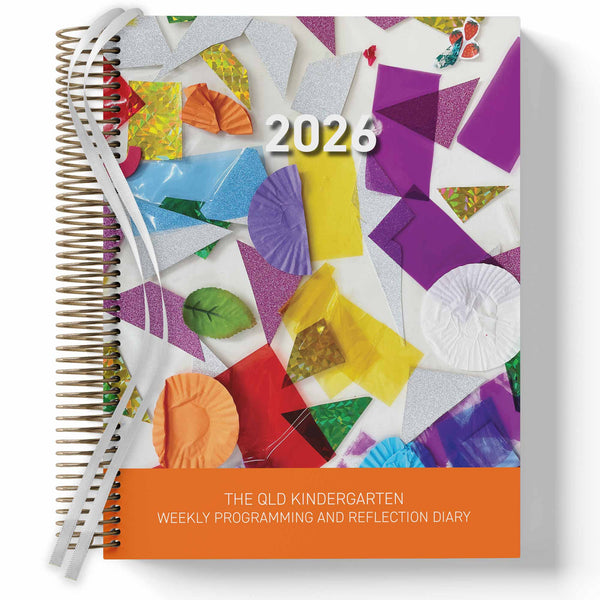
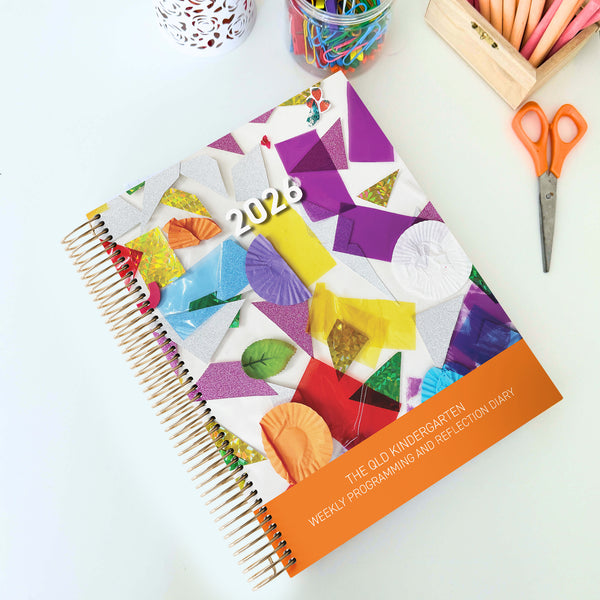
The QLD Kindy Weekly Programming and Reflection Diary is the Butler Diaries product designed for Queensland kindergarten programming and reflection.
It includes QKLG references, allowing educators to connect their everyday documentation with the Queensland kindergarten learning and development areas.
Connecting observations with QKLG learning
When recording children's learning, educators can refer to the QKLG to identify the relevant learning and development areas and key focuses.
For example, a child exploring different ways to construct a bridge may demonstrate learning connected to Active Learning.
If the child explains their ideas, collaborates with others or uses mathematical language, the experience may also connect with Communicating and Connectedness.
The purpose is to identify meaningful learning rather than attach every possible framework reference.
Supporting assessment and planning
The QKLG continua provide a way to consider the context in which learning occurred and the support needed.
Educators can use these considerations when analysing observations and making decisions about future learning opportunities.
The Diary's weekly programming and reflection structure can support a consistent approach to recording these decisions and reviewing their effectiveness.
Documenting ongoing investigations
A weekly programming format does not require educators to conclude an investigation at the end of each week.
For example, an inquiry into insects might continue as children investigate habitats, compare observations, ask new questions and develop ideas about caring for living things.
Each week's documentation can build on previous observations and reflections.
Supporting critical reflection
Educators can use reflection to consider:
-
What did the children demonstrate about their learning?
-
Which QKLG areas and key focuses were relevant?
-
How did our intentional teaching support their learning?
-
Were children able to participate in meaningful and inclusive ways?
-
What did the evidence reveal about their developing capabilities?
-
What might we continue, extend or adjust?
This helps connect everyday programming with the QKLG's emphasis on responsive teaching, assessment and critical reflection.
Frequently Asked Questions About the QKLG
What does QKLG stand for?
QKLG stands for Queensland Kindergarten Learning Guideline.
What is the current version of the QKLG?
The current edition is QKLG 2024, published by the Queensland Curriculum and Assessment Authority.
What are the five QKLG learning and development areas?
The five areas are Identity, Connectedness, Wellbeing, Active Learning and Communicating.
Is QKLG the same as EYLF V2.0?
No. The QKLG 2024 is aligned with EYLF V2.0 but provides specific guidance for the Queensland kindergarten year, including key focuses, significant learnings and continua.
What are the three QKLG continua phases?
The three phases are Emerging, Exploring and Extending.
They consider the familiarity of the learning situation and the level of support a child needs to demonstrate learning.
Are the continua developmental checklists?
No. The QKLG supports professional judgements about which phase a child's demonstrated learning is more like, recognising that learning can vary across situations and over time.
Does the QKLG include literacy and numeracy?
Yes. Literacy and numeracy are addressed within the Communicating learning and development area, particularly through personally meaningful learning experiences.
Does the QKLG support critical reflection?
Yes. Critical reflection is one of the eight QKLG Principles, and each learning and development area includes considerations to support reflection on teaching and learning.
How does the QKLG support transition to Prep?
The QKLG provides guidance for supporting transitions and continuity of learning, including sharing information with families and, with consent, schools.
Which Butler Diaries diary includes the QKLG?
The 2027 QLD Kindy Weekly Programming and Reflection Diary includes QKLG references and supports ongoing programming and reflection.
Bringing the QKLG into everyday kindergarten practice
The Queensland Kindergarten Learning Guideline provides educators with a framework for understanding and supporting children's learning, development and wellbeing.
Its five learning and development areas recognise that children's learning is interconnected, while the key focuses, significant learnings and continua provide guidance for observing progress and making informed teaching decisions.
Effective programming is not about assigning as many learning areas as possible to each experience or completing documentation for its own sake.
It is about recognising meaningful learning, understanding what the evidence tells us and responding in ways that support children to continue developing their knowledge, skills, confidence and capabilities.
By using the QKLG alongside a consistent programming and reflection approach, educators can make their curriculum decision-making more visible while keeping children's learning at the centre of their practice.
Official QKLG resources
- Queensland Kindergarten Learning Guideline 2024 – QCAA
- Download the official QKLG 2024 PDF
- QKLG Learning and Development Areas
- QKLG Continua of Learning and Development
- QKLG Familiarisation and Planning Resources
Related Butler Diaries resource
Related Articles