
-
Observation: During free play, an educator notices that several children are particularly drawn to the sensory table filled with coloured rice. They observe children using various tools and containers to scoop, pour, and transfer the rice.
-
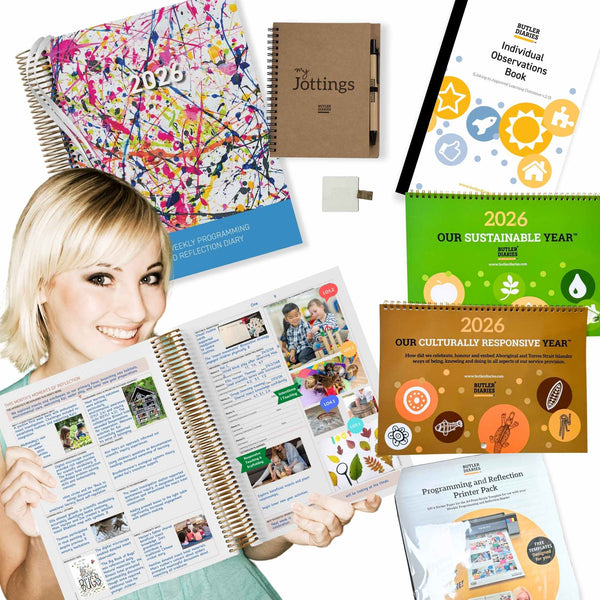
Documentation: The educator takes photos and videos of the children engaging with the colored rice. They also jot down notes about the children's actions, interactions, and conversations in their Jottings Book. For instance, they note that one child commented, "Look, I'm making a rainbow cake!" while another child asked, "Can we mix the colours together?"
-
Reflection and Analysis: Upon reviewing the documentation, the educator reflects on the children's play. They consider how the activity promotes sensory exploration, fine motor development, and imaginative play. They also notice that the children are demonstrating problem-solving skills as they experiment with mixing colours and manipulating the rice.
-
Goal Setting: Based on their reflections, the educator sets a goal to extend the children's exploration of colour mixing and sensory experiences. They aim to provide opportunities for the children to engage in more open-ended experimentation and creative expression. The Educator notes the goal on the Programming Page of that month in the Weekly Programming and Reflection Diary noting the date of the jotting record in the Jottings Book.
-
Planning and Implementation: The educator plans a series of activities focused on colour mixing and sensory exploration. They gather additional materials such as liquid watercolours, pipettes, and mixing containers. They also create a designated art area where children can freely explore and experiment with colours and textures. These experiences are all recorded in the Weekly Programming and Reflection Diary with a link to the goal.
-
Evaluation: Throughout the implementation of the plan, the educator observes the children's engagement and assesses their progress. They notice that the children are increasingly experimenting with mixing different colours to create new shades and hues. They also observe children collaborating and communicating as they share materials and ideas. The Educator captures the evaluation in the Individual Observations Duplicate Book and includes one copy in the children's portfolio.
-
Documentation and Reporting: Finally, the educator documents the outcomes of the planning cycle, including examples of children's artwork and descriptions of their learning experiences in the reflection spread of their Weekly Programming and Reflection Diary. They share this documentation with families through a displayed program and use it to inform future planning cycles and the following week's programming spread, such as introducing new sensory materials or extending the exploration of colour mixing into other areas of the curriculum.

A Practical Example of a Cycle of Planning
Here is an example of what a cycle of planning might look like: