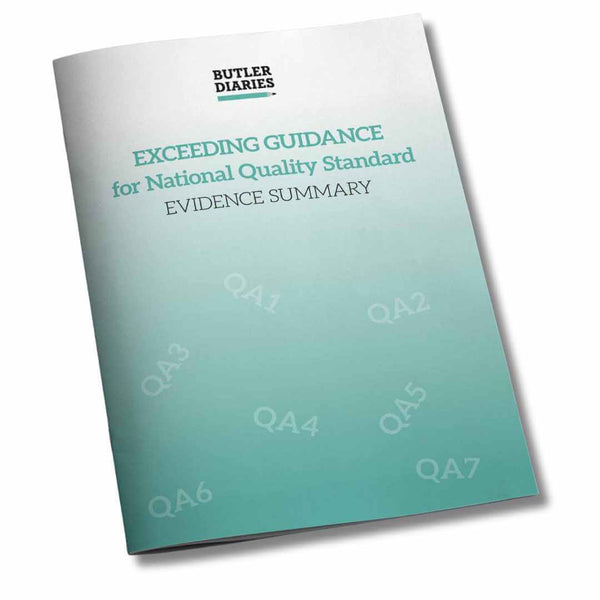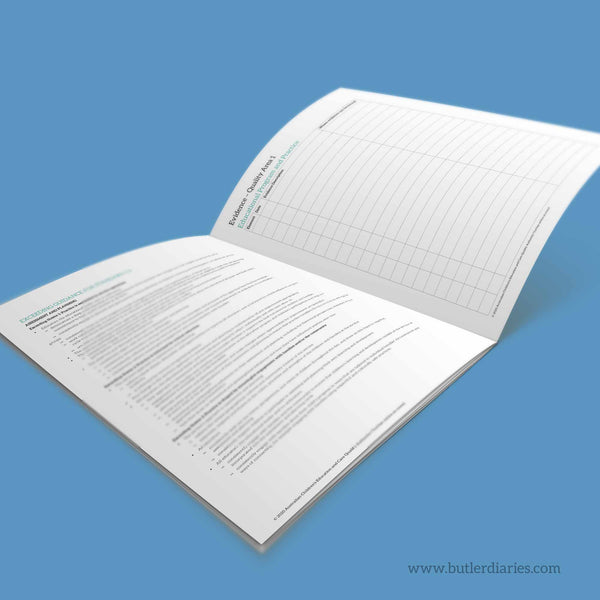


The Exceeding Guidance for NQS Evidence Summary is designed to support you in succeeding at exceeding with guides to exceeding themes and evidence pages for national quality standards. Each quality area is followed by an evidence page that captures details of the evidence you've collected, where it is kept, and which element it relates to. The Evidence Summary is a record of your compliance that can be shared with Assessors during Assessment and Rating and it supports your service to identify areas requiring attention or clearer documentation.
How to Complete the Evidence Summaries in the Exceeding Guidance for NQS Evidence Summary
Evidence summaries are completed by recording:
- the NQS element you are sighting evidence for,
- the date you are sighting evidence or the date where you can find the evidence, for example, if the evidence can be found in a Diary note the date of the page where the evidence is or if you observed the evidence, note the date you observed it,
- a description of what the evidence is showing in relation to the element, and
- where you can find the evidence, for example in weekly reflection spreads, a particular Diary, or other specific location.

Support to Help you Complete the Evidence Summaries in the Exceeding Guidance for NQS Evidence Summary
Your Exceeding Guidance for National Quality Standard: Evidence Summary includes information on exceeding themes that can be used to guide what evidence you should include in your evidence summary.

The Guide to the NQS is also a great resource to help you identify what areas of evidence Assessors are looking for. You can use the questions in the Guide to the NQS to help identify evidence areas.

We've created a free resource, 'Reflective NQS Checklist' that summaries the questions in the Guide to NQS. It's a great tool to support you in understanding what evidence assessors will likely want to sight.
You can download the free guide here.

Who Should Complete the Evidence Summaries in the Exceeding Guidance for NQS Evidence Summary
Educators
Educators can complete Evidence Summaries to show how their documentation and practice is meeting NQS. This can be a great tool to support Educators and Educational Leaders identify specific areas of improvement for each room. The examples above reflect how Educators would complete the Evidence Summaries based on their practice.
Educational Leaders or Nominated Supervisors
Educational Leaders or Nominated Supervisors may choose to complete Evidence Summaries to keep a record of the Service’s overall Assessment evidence and support their completion of their Quality Improvement Plans.