
Using the Educational Leader Diary When You're Only in the Role One or Two Days a Week
Many Educational Leaders don’t work in the role full-time. You might only have one or two dedicated days each week — while also juggling room leadership, ratios, or other responsibilities. Used intentionally, the Educational Leader Diary helps you document professional conversations, plan follow-ups, and build strong Quality Area 7 evidence over time — even with limited leadership hours.

Many Educational Leaders don’t sit in the role full-time.
You might be:
-
off the floor one day a week
-
covering the role alongside room leadership
-
stepping in during leave or transitions
-
supporting a small service where roles overlap
If that’s you, the Educational Leader Diary isn’t about filling every page — it’s about making the limited time you do have count, while still building clear, visible evidence of leadership over time.
This article walks through:
-
how to prioritise your Educational Leader days
-
what to document (without over-documenting)
-
how to use the diary when you’re not acting in the role
First: Shift the Mindset From “Daily Use” to “Intentional Use”
The Educational Leader Diary doesn't have to be used every day — it’s designed to capture leadership actions when they happen.
If you’re only in the role one or two days a week:
-
You are still providing leadership
-
Your impact still accumulates over time
-
Evidence doesn’t need to be daily to be strong
Quality Area 7 doesn’t require constant paperwork — it requires clear, consistent evidence of influence.
Your diary becomes a leadership record, not a timesheet.

How to Maximise Your One or Two Educational Leader Days
1. Choose One Leadership Focus Per Day
Trying to “do everything” in a single day leads to rushed notes and missed evidence.
Instead, pick one main focus, such as:
-
supporting reflective practice
-
mentoring an educator
-
reviewing programming
-
analysing observations
-
planning professional learning
-
following up on goals
Use the Educational Leader Diary to document:
-
what you focused on
-
who was involved
-
why it mattered
-
what the next step is
This keeps your documentation purposeful and assessor-clear.
2. Document Conversations, Not Just Tasks
Educational leadership often happens through professional conversations, not formal meetings.
Use the diary to capture:
-
informal mentoring discussions
-
reflective questions you asked
-
feedback given or received
-
moments of educator growth
Short, intentional notes are enough:
-
key themes
-
educator reflections
-
agreed actions
This shows leadership in action — not just planning.
3. Plan Forward, Not Just Record Backward
On your Educational Leader day, always leave behind a trail forward.
Use the planning sections to note:
-
follow-ups for the next visit
-
questions to revisit
-
educators who may need extra support
-
documentation to check next time
This turns one day a week into ongoing leadership continuity, even when you’re not present.

What to Document When You’re Not Acting as Educational Leader
Your Educational Leader Diary doesn’t need to sit unused the rest of the week.
Many part-time Educational Leaders use other sections strategically to strengthen their role evidence.
Use It as a Leadership Capture Tool
When you’re working in ratio or in another role, you can still record:
-
leadership observations
-
reflective moments you notice
-
practice examples worth revisiting later
-
ideas for team discussions
These notes can be brief and transferred into fuller reflections on your next Educational Leader day.
Use It for “Holding” Evidence
The diary is a safe place to store:
-
notes from educators to follow up
-
examples of practice you want to highlight
-
questions that arise during the week
-
reminders for future mentoring
- critical reflections
This prevents leadership work from living only in your head.
Use Other Pages as Flexible Leadership Spaces
Depending on your service, Educational Leaders often repurpose pages for:
-
educator goal tracking
-
critical reflections and critical reflection prompts
-
Quality Area 1 and 7 evidence notes
- meeting prep or debrief notes
- self-reflection as a leader
The Educational Leader Diary doesn’t require pages to be used exactly as titled — professional judgement always comes first.

A Simple Weekly Flow for Part-Time Educational Leaders
Here’s an example rhythm that works well:
During the week (any role):
-
jot quick leadership observations
-
note questions or patterns
-
flag educators needing follow-up
- critically reflect on areas of practice
On your Educational Leader day:
-
choose one leadership focus
-
expand key notes
-
document conversations and decisions
-
plan next steps
Before finishing the day:
-
leave clear prompts for your next visit
Over time, this builds a strong, traceable leadership narrative — without daily pressure.
What Assessors Look for (Even If You’re Part-Time)
Assessment and Rating doesn’t expect Educational Leaders to be full-time — but they do expect to see:
-
intentional leadership
-
continuity over time
-
evidence of influence on practice
-
reflective decision-making
Your Educational Leader Diary used well shows:
-
how you prioritise limited time
-
how leadership actions connect
-
how improvement is planned and reviewed
That matters far more than frequency.
Final Thought: The Diary Works With Your Reality
If you’re only in the Educational Leader role one or two days a week, the diary should:
-
reduce mental load
-
support consistency
-
make leadership visible
-
work flexibly around your role
You don’t need to fill it.
You need to use it with intention.
That’s what turns limited time into meaningful leadership — and clear evidence when it counts.
Related Articles
-
A Quick Guide to the Educational Leader Diary
-
Common Leadership Problems in Early Childhood Education and How to Solve Them
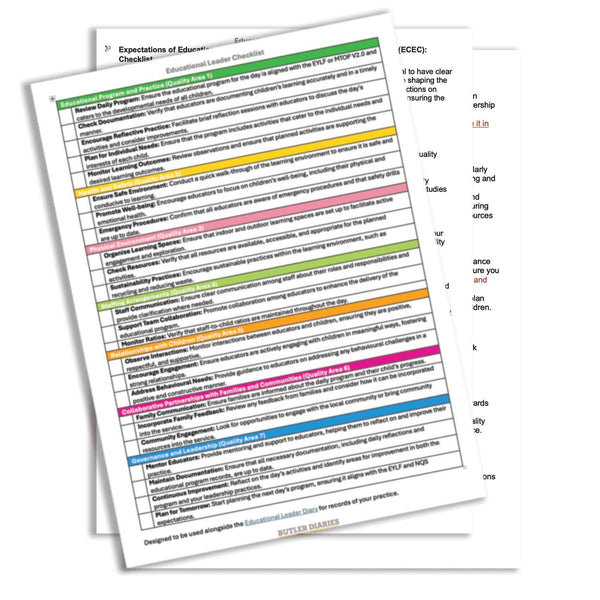
- Expectations of Educational Leaders in Early Childhood Education and Care (Free Checklist)
- Top Three Responsibilities of Educational Leaders in Early Childhood Education and Care
-
Tips for Running Effective Staff Meetings in Early Childhood Education and Care