
How to Prepare for Assessment and Rating: A Practical Guide for Australian Services
A practical, role-by-role guide to Assessment and Rating readiness: what assessors look for, the evidence that matters for each quality area, and how to make your documentation walk-in ready all year round.

Assessment and Rating goes better for services that treat readiness as a habit, not an event. The services that scramble are almost never short on quality; they are short on evidence they can put their hands on. This guide covers what assessors actually look at, the readiness jobs for each role, and how to keep your documentation walk-in ready all year.
What does Assessment and Rating actually assess?
Your service is assessed against the National Quality Standard's seven quality areas, from educational program and practice (QA1) through to governance and leadership (QA7), and rated at levels including Working Towards, Meeting and Exceeding NQS. Assessors observe practice, talk with your team, and look at documentation. You cannot rehearse the observation and the conversations; they reflect what your service genuinely does. Documentation is the part you can control completely, and it is where preparation pays off most.
Start with the fresh-eyes walk
The single most useful preparation exercise costs nothing: walk your own service pretending to be the assessor. Ask to see the program. Ask how last week's observations changed this week's plan. Ask an educator to show critical reflection from this month. Ask where the incident records live. If a few of those questions make you wince, that is the exercise doing its job. Better a wince now than a surprise on the day.
The evidence that matters most: QA1 and the cycle of planning
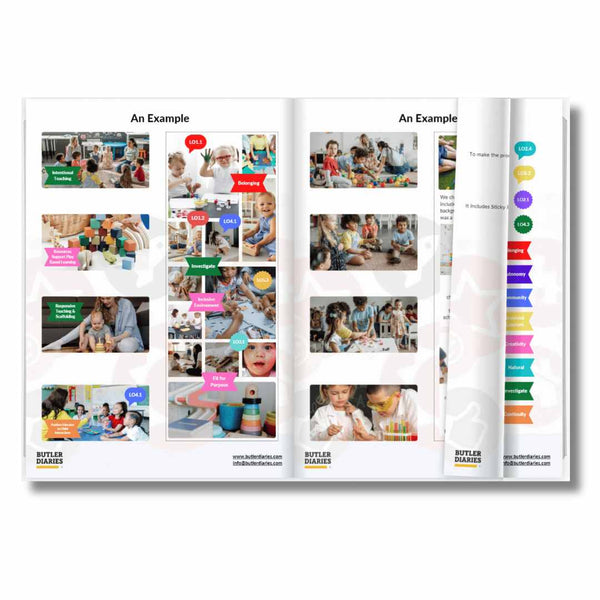
The heart of the documentation conversation is Quality Area 1: can your service show a genuine cycle of planning? Assessors want to see that observations lead to plans, plans get implemented, and reflection changes what happens next. The strongest evidence is not a separate binder built for the occasion; it is your everyday program showing the loop closing week after week. If you want to see what that looks like in practice, our worked example of a cycle of planning walks through it, and our Cycle of Planning Made Visible tools are laid out so the cycle shows itself on the page.
Readiness, role by role
Educators: your Diary or program should show observations, plans, evidence of learning and reflection connected to your framework's outcomes, current to this week, in your own voice. Real beats polished.
Educational leaders: be ready to show how you influence the program: mentoring conversations, room-by-room oversight of the planning cycle, and what changed because of you. If it only lives in your head, it does not exist at A&R.
Nominated supervisors and directors: your ground is the operational spine: incident records, complaints handling, staffing, policies and the QIP. The test is retrieval speed: anything an assessor asks for should surface in minutes, not days.
Cooks: menus, dietary requirements and food safety records, current and findable. The kitchen is part of the service's story too.
Family day care educators: you carry all of the above as a team of one, plus your coordinator's copies. Duplicate records and one well-kept Diary beat a filing system you cannot maintain alone.
The most common gaps we hear about
- Reflection that describes instead of reflects. "We did water play and the children enjoyed it" is a report. What you noticed, what you wondered and what you will change is reflection. Our critical reflection prompts help teams make that jump.
- The loop that never closes. Observations everywhere, but no visible line from them to next week's or month's program.
- Documentation built for the assessor, not the work. Binders assembled the fortnight before ring hollow next to an ordinary, honest, current Diary.
- Over-documentation. Volume is not evidence. A smaller amount of connected, meaningful documentation reads as far stronger practice than an avalanche of photos and printouts.
- Records nobody can find. The evidence exists; the retrieval fails. Where things live matters as much as whether they exist.
A simple year-round rhythm
- Weekly: the program and reflections stay current because they are part of the day's work, about ten minutes, not a Sunday job. This is the whole idea behind our programming and reflection diaries.
- Monthly: the educational leader has collected evidence of spot-checks on cycle of planning end to end and their reflective support.
- Each term: the fresh-eyes walk, plus fifteen minutes updating the QIP while the walk is fresh.
- Always: when notice arrives, the only job left should be tidying, not creating.
Frequently asked questions
How much notice do we get before a visit?
It varies by state and circumstances, and it is shrinking across the sector. Build your readiness on the assumption of short notice and the question stops mattering.
Should we create a special A&R folder?
An index that says where evidence lives is genuinely useful. Recreating evidence into a display folder is wasted effort; assessors want your real working documents. You could use a tool like the Exceeding Guidance for the National Quality Standard: Evidence Summary to note where evidence is kept so you can see an overview of your evidence and be able to find it quickly.
What if we are rated Working Towards?
It is a starting point, not a verdict. The QIP is the vehicle: name the gaps honestly, show the plan, and show movement. Services re-rate upward on exactly that evidence.
What is the single best thing to do this week?
The fresh-eyes walk. It costs an hour and tells you precisely where you stand.
Related Articles