
Does the Whole Service Need to Use the Same Programming Method?
"Does our entire service need to use the same programming method?" The short answer is no—but consistency, collaboration, and alignment with the Early Years Learning Framework (EYLF) v2.0 are key factors to consider.

When it comes to programming in ECEC, one of the most common questions educators and service leaders ask is:
"Does our entire service need to use the same programming method?"
The short answer is no—but consistency, collaboration, and alignment with the Early Years Learning Framework (EYLF) v2.0 are key factors to consider.
In this article, we’ll explore why services might use different programming approaches, the benefits of consistency, and how to ensure all methods still meet regulatory and quality standards.
What Is a Programming Method in ECEC?
A programming method refers to the way educators document and plan for children's learning. It includes:
- Observations (e.g., anecdotal records, learning stories, photo documentation)
- Planning Cycles (e.g., forward planning, emergent curriculum, project-based learning)
- Reflection Practices (e.g., critical reflection, educator discussions, family input)
Services can choose from a range of methods based on their philosophy, educator strengths, and children’s needs.

Can Different Programming Methods Work in One Service?
Absolutely! A single service does not have to adopt just one method across all rooms or age groups. Flexibility allows educators to respond to the unique needs of children at different developmental stages.
While programming approaches can differ, they must all align with the National Quality Standard (NQS) and EYLF v2.0.
The Importance of a Consistent Philosophy
Even if different methods are used, a shared philosophy is crucial. This ensures:
✔ Continuity of Learning – Children’s development is tracked cohesively, avoiding gaps in documentation.
✔ Consistency for Families – Families can understand and engage with programming, even if different methods are used. If you're using Butler Diaries, you can download the free information pack for families: "Supporting Families to Understand the Butler Method: Free Parent Information on Butler Diaries".
✔ Smooth Transitions – As children move rooms, educators can follow a shared language and approach to learning.
✔ Streamlined Assessment & Rating – A cohesive system makes it easier to demonstrate compliance with the NQS.
A strong programming policy should outline expectations for documentation while allowing flexibility for educators to apply methods that best suit their learning environment.

Finding the Right Balance for Your Service
To determine whether your service should use one method or multiple approaches, consider:
- Your Educational Philosophy – Does your service follow a play-based, Reggio Emilia, Montessori, or other framework? Ensure programming aligns with this vision.
- Team Strengths & Preferences – Engage educators in discussions about what works best for their rooms and how to keep programming manageable.
- Children’s Needs & Development – Programming should be responsive and adaptable to different age groups and learning styles.
- Compliance & Quality Standards – Ensure all methods reflect the planning cycle and demonstrate how children’s learning is supported.
Approaching your Educational Leader with a New Programming Method
Approaching your Educational Leader about trying out a new programming method requires careful planning, clear communication, and a strong understanding of how the change aligns with your centre’s philosophy, EYLF v.2.0, and best practices in ECEC. Here are some key strategies to help you make a persuasive case:
1. Do Your Research
Before bringing up the idea, gather relevant information about the new programming method, including:
- How it works – Provide a clear, concise explanation.
- Benefits – Show how it enhances planning, documentation, and children’s learning.
- Alignment with EYLF v.2.0 – Highlight how it supports play-based learning, critical reflection, and other EYLF principles.
- Examples of success – If possible, provide case studies or examples of other services using the method successfully.
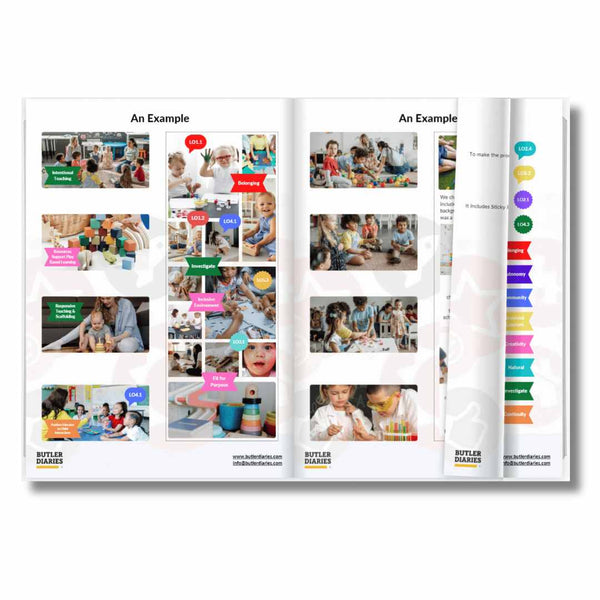
Butler Diaries for example has a range of support materials to help Educators use the Butler Method of Programming and Reflection:
- Our Blog includes examples of our Diaries and customer experiences using the Diaries for Assessment and Rating. You can find support articles here.
- Our Help Centre features Purchasing Guides and answers to common questions, you can visit the help centre here.
- You can download the Compliance eBook for your Diary by heading
to the product page and opening the 'Compliance' Tab. This includes
sample pages and information on how the Diary links to Frameworks,
Theorists, National Quality Standards, Developmental Milestones, and
more. Download from the Diary product page. - We have developed a Print Ready Photo Template to help you
easily capture Photo Evidence for your Programming and
Reflection Diary. You can get yours here. - You can connect with the Butler Diaries community for fellow
educator support and tips and tricks on the Butler Method. Follow our socials at the bottom of our website: www.butlerdiaries.com. - Existing customers can join our customer-only Facebook Group for direct support and perks. If you're a customer, you can join now.
- Sign up to our Newsletter for further support articles and important announcements. You can sign up at the bottom of the Early Childhood home page.
- And finally, our team is always here to help you. Get in touch any anytime.

2. Link to Centre Goals and Values
Educational Leaders are responsible for ensuring programming aligns with the service philosophy and quality improvement goals. Show how the new method:
- Supports child-led learning and play
- Encourages collaborative planning and critical reflection
- Helps educators document learning more effectively
- Aligns with Assessment and Rating criteria under the NQS
3. Identify Challenges & Provide Solutions
Be upfront about potential challenges, such as learning a new system or adapting current processes, but also offer solutions. For example:
- Training needs? Suggest a trial period to test it out and show the support available from the company or service.
- Time concerns? Show how it might save time in the long run.
- Resistance to change? Propose a gradual implementation rather than a full shift.
4. Suggest a Trial Period
Rather than asking for a complete overhaul, suggest a trial period where a small group of educators can test the method and provide feedback or you yourself can trial the new method in your room. This reduces risk and allows your Educational Leader to see its value firsthand.
5. Frame It as a Team Collaboration
Rather than making it about your preference, frame the discussion around how the whole team and the children will benefit. Involve other educators in discussions beforehand to build support.

6. Be Open to Feedback & Discussion
Your leader might have concerns or suggestions to refine your idea. Be open to dialogue, listen actively, and be willing to make adjustments.
Example Conversation Starter:
"I’ve been researching different programming methods, and I came across one that seems to align really well with our philosophy and EYLF v.2.0. I’d love to chat with you about the possibility of trialing it, as I think it could help with [insert benefit, e.g., making documentation more efficient or improving reflective practice]. Could we set up a time to discuss this?"
Conclusion: Unity in Diversity
While your service does not need to use one programming method across all rooms, a cohesive approach is essential. Different methods can work effectively as long as they align with EYLF v2.0, support children’s learning outcomes, and maintain consistency in documentation.
By finding the right balance between flexibility and uniformity, your service can ensure high-quality educational experiences for children, while making programming meaningful and manageable for educators.
Explore our range of educator-friendly diaries designed to streamline documentation and programming across all age groups and don't hesitate to reach out for support.
For answers to more frequently asked questions about programming, check out this article.
Related Blog Posts
-
A Closer Look at the Learning Data, Jottings & Reflection Box in Your Programming Diary
-
How Do I Fit Everything In? Time-Saving Tips for Programming and Documentation
-
Understanding the EYLF Practices in Early Childhood Education and Care
-
Support Directories: Finding the Support You Need on Our Website